When Doug Conant took over as CEO of Campbell Soup Company in 2001, the brand was simmering in a "toxic" culture. Sales were down, the stock price had plummeted, and employee morale was at an all-time low. Most leaders would have reached for financial levers alone. Conant reached for Power Skills.
By applying the very pillars we value at Scofolio, Conant proved that "winning in the workplace" is the only sustainable way to "win in the marketplace." Here is how his leadership mapped directly to the Scofolio assessment framework.
1. Social Intelligence: The Art of the "TouchPoint"
Conant understood that leadership isn’t practiced in a vacuum; it’s practiced in the smallest of moments.
Communication & Interaction Ability: Despite being a self-described introvert, Conant mastered the "TouchPoint." He made it a priority to be visible, moving from behind his desk to the front lines. His commitment to writing 10 to 20 handwritten notes a day—totaling over 30,000 during his tenure—was a masterclass in high-impact Communication.
Openness: He led with transparency, famously telling his team that he needed to "go out on a limb" to share his vision. By being open about his expectations and his own temperament, he invited a culture of mutual Trust.
2. Leadership: Tough-Minded Accountability
Power skills are often mistaken for "soft" skills, but Conant showed they have a hard edge.
Decision Making: One of the most critical points in the turnaround was his decision to overhaul the leadership tier. When it became clear that the existing management wasn't aligned with a culture of engagement, he oversaw the exit of 300 of the top 350 leaders.
Problem Solving: He didn't just treat the symptoms (low sales); he solved the root cause (disengagement). He recognized that "competence and character" were the two non-negotiables for any leader under his watch.
3. Personal Effectiveness: The "Tender-Hearted" Edge
Conant’s guiding principle was to be "tough-minded on issues and tender-hearted toward people."
Empathy: He lived by the question, "How can I help?" By viewing his 20,000 employees as individuals with their own "priorities, anxieties, hopes, and dreams," he transitioned the company from a hierarchy to a Partnership.
Self-Reflection: He was acutely aware of how his behavior influenced the organization. He famously said, "We have to behave our way to more credibility." This level of Self-Reflection allowed him to step out of his comfort zone to lead from the front.
4. Data-wise
Instead of rushing solutions, he applied data-wise strategic curiosity—digging into root causes, questioning assumptions, and listening closely to employees. By combining data with curiosity, he rebuilt trust, reignited engagement, and ultimately turned the company around.
Curiosity: He remained curious about what actually drove performance, eventually discovering a "flywheel" effect: the more the company invested in social value and community, the better the financial performance became.
The Bottom Line
Doug Conant didn't save Campbell Soup by simply changing the recipe of the Soup. He saved it by upgrading the Power Skills of his leadership team.
By the time he retired in 2011, Campbell’s was outperforming the S&P 500, sales were growing, and the company was ranked as one of the most socially responsible in the U.S. It is a definitive reminder that when you invest in Social Intelligence, Personal Effectiveness, and Leadership, the marketplace results follow.
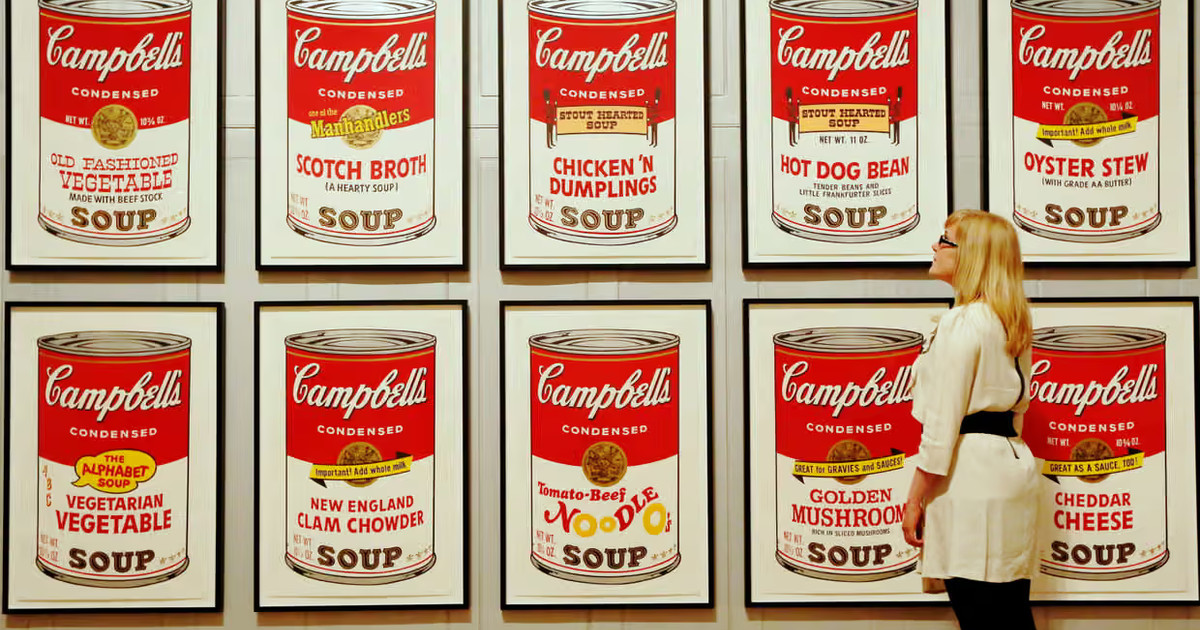
Cover pic © Andy Warhol’s screen prints in the early 1960s helped to cement Campbell’s soup in popular culture. Photograph: Luke MacGregor/Reuters