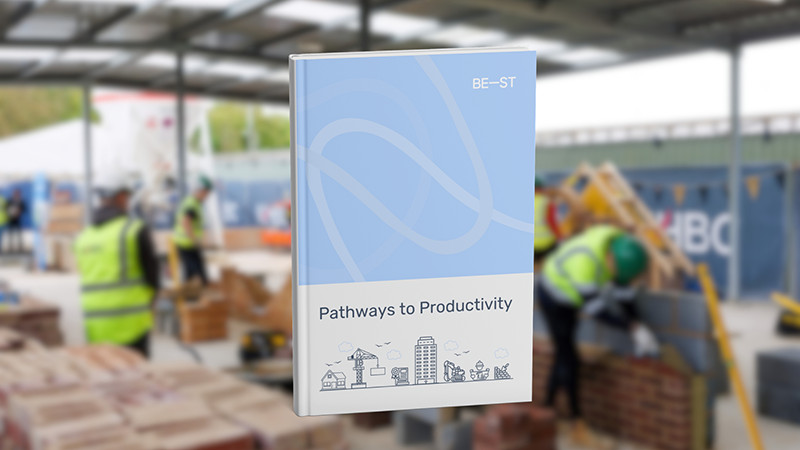
A recent report highlighted by Project Scotland explores how to transform workforce pathways in Scotland’s construction sector. While the article is framed around skills shortages, entry routes, and system reform, a closer analysis reveals something deeper: the growing centrality of power skills such as resilience, adaptability, and collaboration.
Rather than treating these as secondary traits, the report implicitly positions them as core to the sector’s future. What appears to be a technical workforce discussion is, in reality, a reflection of how human capabilities are becoming the foundation of performance in complex, evolving industries.
Resilience as a Workforce Foundation
The report emphasizes the need for long-term sustainability and stability in the workforce. Interpreted more deeply, this signals a shift toward resilience not just as an individual quality, but as a system-level capability. Workers are expected to navigate uncertain career paths, while organizations must continuously adapt to external pressures such as technological change and new regulatory demands.
Resilience here is no longer optional. It becomes the ability to persist, adjust, and remain effective despite disruption.
Adaptability Behind Technical Change
Much of the report focuses on evolving skill demands driven by digitalization and modern construction methods. However, beneath this technical framing lies a more fundamental requirement: adaptability.
Workers are no longer preparing for static roles. Instead, they are expected to continuously learn, shift across tasks, and respond to changing environments. This reframes the modern worker as an adaptive learner, not just a holder of predefined skills.
Collaboration as a Structural Necessity
The report calls for stronger coordination between employers, training providers, and institutions. This highlights the importance of collaboration, not simply as a soft skill, but as a structural requirement.
Work is increasingly distributed across systems, requiring individuals and organizations to operate within interconnected networks. The ability to collaborate becomes essential for both productivity and innovation.
Confidence and Culture as Hidden Capabilities
Interestingly, the report points to factors such as employer confidence and sector culture as measures of success. These elements reflect deeper human dimensions that are often overlooked.
Confidence relates to trust in one’s abilities and decision-making, while culture shapes behaviors, norms, and identity within the workforce. Together, they indicate that effective performance depends not only on skills, but also on how individuals perceive themselves and their role within a system.
Persistence in the Face of Barriers
The report also highlights barriers to entry, where individuals struggle to access opportunities despite interest in the sector. This reveals another critical power skill: persistence.
In such environments, success often depends on the ability to navigate uncertainty, sustain motivation, and continue progressing despite limited support. Ironically, the system ends up selecting for resilience rather than deliberately developing it.